Singapore’s rhythm game scene is in better shape than many players assume. Timezone runs Pump It Up Phoenix and DDR WORLD cabinets across five venues, Virtualand at NEX keeps two DDR WORLD machines in top condition, and in March 2026 the first official Pump It Up league in Singapore, Pump It Up Dominion, held its finals at Timezone Westgate and sent its winners to Korea.
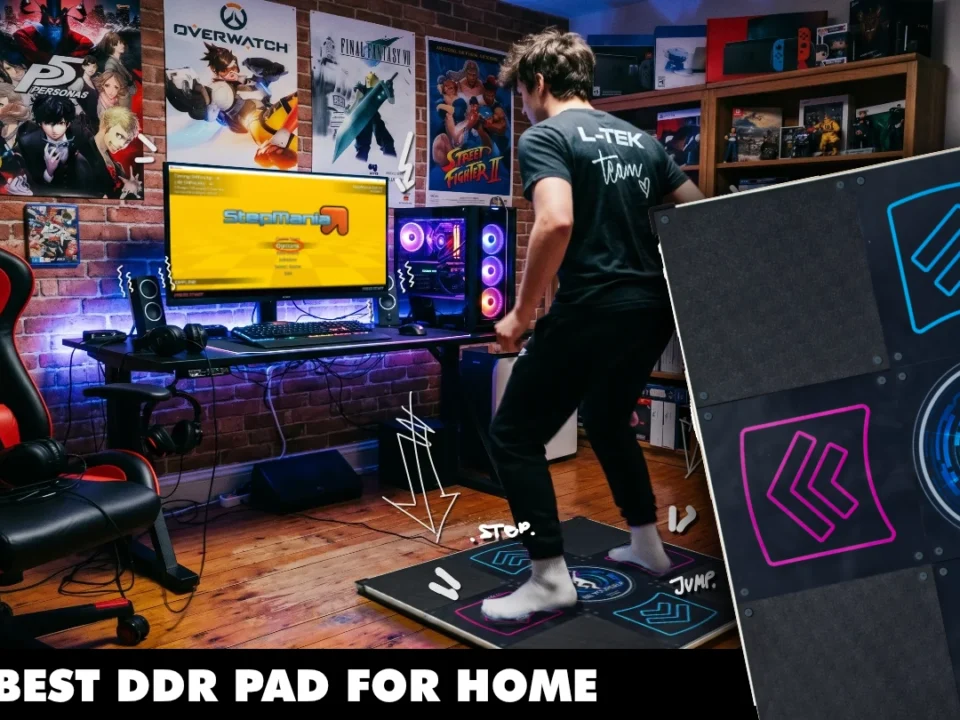
What Singapore doesn’t have is a single shop that sells a proper hard dance pad. Search Shopee or Lazada and you get foam toy mats for S$20 to S$90. This guide covers where to play on real machines, what the local market genuinely offers, and how to import a tournament-grade pad without any surprises at customs. The short version: you import one direct from the manufacturer. An LTEK hard pad lands in Singapore at about S$355 to S$440 plus 9% GST, door to door in roughly three to four weeks.
Where to Play DDR and Pump It Up in Singapore
If you want arcade hardware, five Timezone venues currently run dance machines:
- Timezone Orchard Xchange: the largest Timezone in Singapore, directly above Orchard MRT, with a DDR WORLD cabinet and a Pump It Up Phoenix. The most convenient stop if you are in town.
- Timezone Jurong Point: two Pump It Up Phoenix machines, so queues move faster at peak hours — the go-to venue in the west.
- Timezone Westgate: a dedicated music zone with Pump It Up, DDR and DANCERUSH, and host of the Pump It Up Dominion 2026 finals.
- Timezone Waterway Point and Timezone West Mall round out the list.
Note that Plaza Singapura removed its dance machines, so cross it off older lists.
Outside Timezone, Virtualand at NEX in Serangoon is the venue serious players name first: two DDR WORLD cabinets kept in top condition, open late on weekends. Cow Play Cow Moo at Suntec City also has a DDR WORLD and a Pump It Up Phoenix; machine condition there varies, so check recent player reports before making a dedicated trip.
The competitive calendar matters too. Pump It Up Dominion 2026, run by Andamiro and Timezone, was the first official PIU league held in Singapore: qualifiers ran across four Timezone venues in January and February, the finals took place at Westgate on 7 March, and the winners flew to Korea. If the cycle repeats, expect the next edition around January to March 2027.
Why Serious Players End Up Building a Home Setup
Arcades are where the scene meets, but they are a limited practice environment. You queue during peak hours, you pay per credit, and you play whatever the cabinet’s song list and current condition allow. Sensors wear on public machines, and you can’t recalibrate one mid-session.
A home setup removes those constraints:
- StepMania and ITGmania cost nothing. Both are free, open-source rhythm games for PC, with thousands of community-made songs and courses, and both read a USB dance pad as a standard controller.
- You practise on your own terms. Slow a chart down, repeat one 20-second section until it sticks, track your scores over months. None of that is practical on a public cabinet.
- Cost per session collapses. A hard pad is a one-off purchase; every session after that is free.
- Cardio that sticks. A rhythm game session is a workout at home, in air-conditioning, on your own schedule.
The catch, until now, was hardware. A home setup is only as good as the pad under your feet, and Singapore’s retail market has never stocked a serious one.
What You Can Buy in Singapore Today
Four realistic routes exist in mid-2026.
Soft mats from Shopee, Lazada and Amazon.sg (S$20 to S$90). These are toy-grade: thin foam over plastic film sensors. They slide on tile and laminate, misread fast steps, and develop dead zones where they crease. For a child playing casually they are fine. For StepMania or Pump It Up charts at any real speed, they’re the reason many people wrongly conclude that home pads don’t work.
StepManiaX: not available here. There are no StepManiaX machines in Singapore and no regional distributor. The SMX Stage pad sells direct from the USA at US$1,895, and with roughly 116 kg of freight the realistic landed cost climbs past S$3,000. That is machine-grade equipment at a machine-grade price.
DIY builds. Some players build their own sensor pads from parts. It can produce good results, but it demands wiring and calibration skills, sourcing components from several suppliers, and there is no warranty when something fails.
The second-hand market. Used LTEK pads appear on Carousell at S$470 to S$800, roughly 60–70% of what they cost new and landed. Two things follow from that. First, hard pads hold their value in Singapore. Second, players here already own them; they simply had to import them.
That last route points at the practical answer: importing a purpose-built hard pad directly from the manufacturer.
Choosing an LTEK Pad: Core, Prime, PRO X and PIU
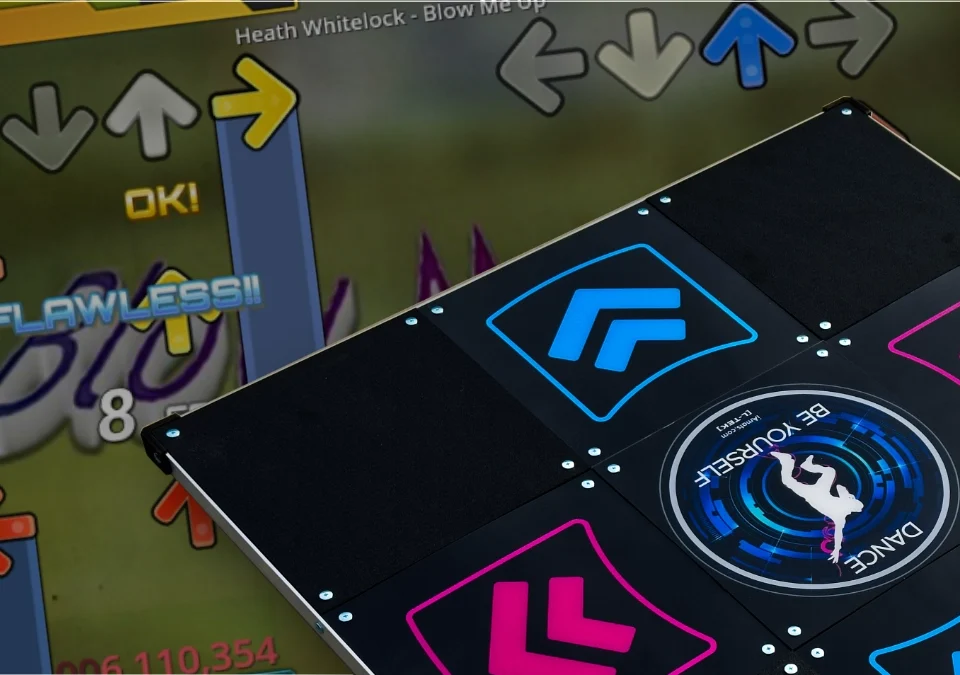
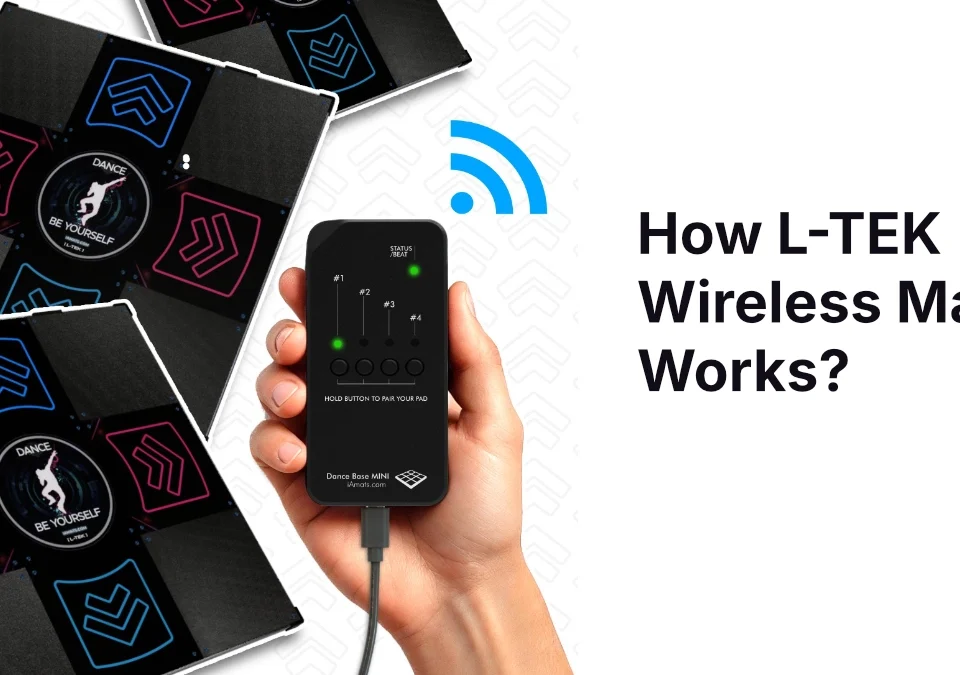
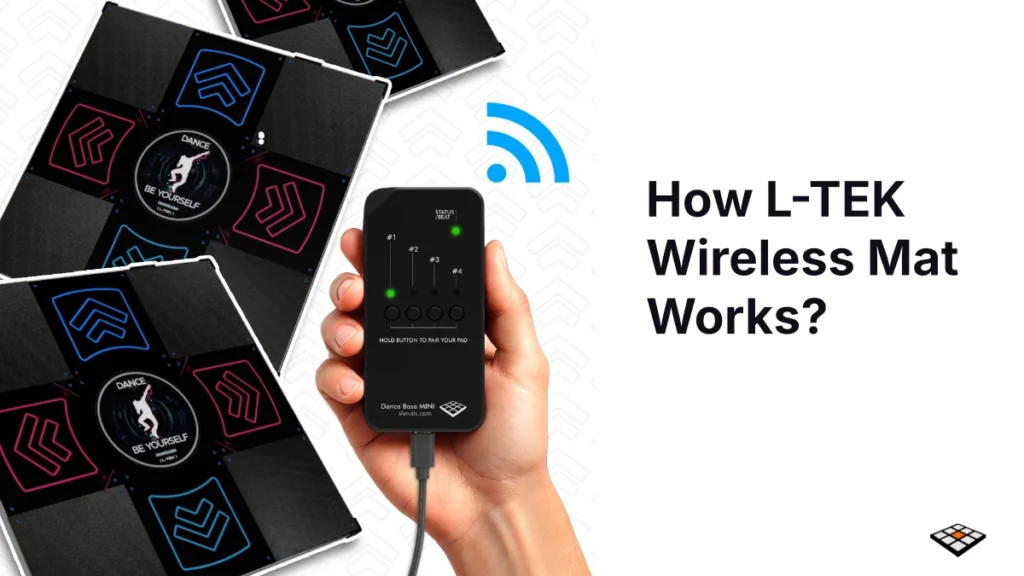
LTEK pads are built by L-TEK in Poland, in the EU. The company has been making interactive dance mats since 2004, with its first commercial models in 2006. Every pad is USB plug-and-play on a PC or laptop: connect it and StepMania or ITGmania sees it as a controller, with no drivers to install. For console play on original hardware there is a PS2 & PSX Converter; there’s no native PS5 or Switch support, so plan around a PC.
Checkout is in euros; the S$ figures below are approximate at July 2026 rates.
- Dance mat LTEK Core (€240, about S$355): the entry-level hard pad and the smallest step up from a soft mat into rigid-platform play.
- Dance mat LTEK Prime (€300, about S$440): the flagship pick, with built-in START and SELECT buttons and USB profile switching, so you change mappings on the pad itself rather than in software.
- Dance mat LTEK PRO X (€279, about S$410): the pro model for players targeting high-level StepMania and ITG play.
- Dance mat EX PRO Metal in black or white (€242, about S$355): metal arcade-style construction for the closest cabinet feel.
- Dance mat PIU EX PRO Metal (€252, about S$370): the five-panel diagonal Pump It Up layout. If the goal is bringing Phoenix practice home, this is the layout to buy.
- Next Level Gaming Mat (€110, about S$160): the quietest option in the range and the usual pick for families in HDB blocks and multi-family homes — a casual interactive gaming mat for home game nights and broader-platform play, shipped with 9 free dance games. For serious StepMania or Pump It Up training, pick a hard pad above instead.
- The Handbar and LTEK Handbar PRO: arcade-style safety bars for balance on heavier charts. Bundles such as the Family Dance Mat Set run up to €782 (about S$1,150).
For context against what Singapore gamers already spend: a PS5 is S$849, a Switch 2 is S$719 and a Secretlab chair runs S$589 to S$609. A hard pad sits in the same bracket, holds 60–70% of its value on Carousell, and buying once beats replacing foam mats that fail.
Two policies matter more at this distance than any spec sheet. Every pad carries a 2-year warranty, and serious faults in normal use are rare — LTEK has built its reputation on mats that are hard to wear out. When something does need attention, L-TEK covers it under the warranty and ships the spare panel or part to your door, rather than asking you to freight a 20 kg mat back to Europe. Transport is covered too: damage in transit is handled with the carrier, and in the rare case of serious courier mishandling L-TEK ships a replacement mat straight away and pursues the claim with the carrier itself — it has a name for fast reshipments in exactly those situations. Singapore’s Lemon Law does not cover overseas sellers, so an explicit manufacturer warranty with parts shipped to your door is the protection you can rely on, alongside chargeback cover on card and PayPal payments.
Will It Annoy My Neighbours? The HDB Question
Impact noise is among the most common neighbour complaints in Singapore, and quiet hours run from 22:30 to 7:00. So it’s the right question to ask before buying, and the answer is more reassuring than most people expect.
The first point: on a hard pad you step, you don’t jump. Soft foam mats bounce underfoot and push players into stomping, because light steps fail to register. A rigid pad registers a normal step, so experienced players stay low and transfer weight rather than landing from height.
The second point is construction. Every LTEK hard pad has soundproofing strips fitted on the underside, and they do their job well even placed directly on parquet or laminate. For additional damping — worth having in an HDB flat, especially for later sessions — put the pad on a rug or carpet.
And if the priority is simply the quietest option in the house, that’s the Next Level Gaming Mat — the model families in HDB blocks and multi-family homes choose most often.
The practicalities suit a flat. A pad occupies about a square metre of floor while in use and stores vertically against a wall or behind a door afterwards. Keep sessions outside quiet hours, add a rug beneath it for extra quiet, and stepping practice fits an HDB routine.
Importing a Dance Pad to Singapore, Step by Step
Singapore is one of the simplest import destinations anywhere. Here’s exactly what happens, so nothing surprises you.
Duty: zero. Singapore levies import duty only on alcohol, tobacco, motor vehicles and petroleum products. A dance pad attracts no duty at all.
GST: 9% above S$400. For courier and air imports, GST applies to the full CIF value, meaning the goods plus insurance and freight, whenever that total exceeds S$400. The courier (DHL, FedEx or UPS) collects the GST before delivery, together with an administration fee of about S$10 to S$20. As a rule of thumb, budget roughly a tenth of your total order value on top of checkout.
At or under S$400 CIF: nothing. No GST, no fees. Some accessories fall within that threshold.
Checkout prices exclude Singapore GST. iamats.com is not GST-registered in Singapore, as it sits below the overseas-vendor registration thresholds, so the price you see at checkout is the EU price and the 9% is paid to the courier on arrival. Same money either way; you should simply know when it is collected.
What you’ll actually pay — two worked examples.
- Dance mat LTEK Prime (€300, about S$440): the goods alone already sit above S$400, so GST applies to the full CIF total. As an illustration, if the pad plus shipping comes to about S$550 CIF, the courier collects roughly S$50 GST plus the S$10–20 admin fee before delivery — call it S$60–70 on top, paid on arrival rather than at checkout. Your exact shipping cost shows at checkout, so you can run this maths on the real number before ordering.
- Next Level Gaming Mat (€110, about S$160): even with courier shipping, the total usually stays at or under S$400 CIF. In that case there’s nothing to pay at import — no GST, no courier fee. The price you see plus shipping is the price, full stop.
Timeline. Most mats are manufactured to order: allow 8 to 12 working days for production and dispatch, then 2 to 7 business days for courier transit from Poland to Singapore, or 2 to 4 on express services. Door to door, plan for roughly three to four weeks. The exact shipping cost for your address is calculated at checkout; current carrier details are on the shipping page.
Payment and returns. Visa, Mastercard and PayPal are accepted, and both routes carry chargeback protection on top of the 2-year warranty. Return terms are on the returns page.
The Bottom Line
Singapore has places to play, a community around Timezone and Virtualand, and now a league that may return in 2027. What it has never had is a local shop where you can buy a dance pad built for real play, and the S$20 foam mats on Shopee aren’t that. Importing an LTEK hard pad lands at a total cost in the same bracket as a PS5, runs the full StepMania and ITGmania catalogues on your PC, and carries a 2-year warranty with spare parts shipped to Singapore instead of return freight. The scene is here. The pad, finally, can be too.
More setup and practice guides are in the Matology blog.
References
- Singapore Customs: duties and GST on imports
- ITGmania (free, open-source)
- StepMania
- Timezone Singapore
Frequently Asked Questions
Can I buy a hard dance pad in a shop in Singapore?
No. As of mid-2026, no local retailer stocks hard or metal dance pads. Shopee, Lazada and Amazon.sg carry soft toy-grade mats at S$20 to S$90, which are not suitable for StepMania or Pump It Up practice. The only local source of hard pads is the second-hand market, where used LTEK pads appear on Carousell at S$470 to S$800. New pads have to be imported.
How much import tax will I pay on a dance pad in Singapore?
There is no import duty on dance pads; Singapore levies duty only on alcohol, tobacco, motor vehicles and petroleum. You pay 9% GST on the full CIF value (goods plus insurance and freight) when it exceeds S$400, collected by the courier before delivery with an administration fee of about S$10 to S$20. Example: an LTEK Prime totalling about S$550 with shipping means roughly S$50 GST plus the fee. The Next Level Gaming Mat usually stays at or under S$400 CIF and enters with no charges at all.
How long does delivery from iamats.com to Singapore take?
Most mats are built to order, so allow 8 to 12 working days for manufacturing and dispatch. Courier transit from Poland to Singapore then takes 2 to 7 business days, or 2 to 4 on express services. Door to door, plan for roughly three to four weeks. The exact shipping cost for your address is calculated at checkout.
Is StepManiaX available in Singapore?
No. As of mid-2026 there are no StepManiaX machines in Singapore and no regional distributor. The SMX Stage pad sells direct from the USA at US$1,895 and ships at roughly 116 kg, putting the realistic landed cost above S$3,000. Home players in Singapore instead run StepMania or ITGmania on a PC with a USB hard pad such as the LTEK Prime or PRO X.
Will a hard dance pad disturb my HDB neighbours?
Less than you might expect. Every LTEK hard pad has soundproofing strips on the underside, and they work well even directly on parquet or laminate; for additional damping, place the pad on a rug or carpet. On a rigid pad you also step rather than jump. Keep sessions outside the 22:30 to 7:00 quiet hours. For the quietest option in the range, families most often choose the Next Level Gaming Mat, which also ships with 9 free dance games.
Which pad should I buy for Pump It Up at home?
The Dance mat PIU EX PRO Metal (€252, about S$370) uses the five-panel diagonal Pump It Up layout, so home practice matches the Phoenix cabinets at Timezone. Add the Handbar or Handbar PRO if you want an arcade-style safety bar for balance on harder charts. Standard four-panel models such as the Core or Prime suit DDR, StepMania and ITGmania instead.
Do LTEK dance pads work with PS5 or Nintendo Switch?
Hard pads have no native PS5 or Switch support, so plan a PC or laptop setup. Every LTEK pad is USB plug-and-play and works with StepMania and ITGmania, both free and open source, with thousands of community songs. For original console hardware, the PS2 & PSX Converter lets the pads run on PlayStation 2 and PSX titles. The casual Next Level Gaming Mat is the broader-platform option in the range — check its product page for current platform profiles.
What happens if the pad breaks? Does the warranty apply in Singapore?
Every pad carries a 2-year manufacturer warranty, and serious faults in normal use are rare — the design is repairable, so L-TEK covers warranty issues by shipping spare panels or parts to Singapore rather than requiring you to freight a 20 kg mat back to Europe. Damage in transit is handled with the carrier, and after serious courier damage L-TEK ships a replacement mat straight away while pursuing the claim itself. Singapore’s Lemon Law does not apply to overseas sellers, which is exactly why the explicit warranty matters; card and PayPal payments add chargeback protection on top.